
Discover St Andrew’s
Stories in wood, stone and glass — medieval faith at the heart of Little Massingham
St Andrew’s is a Grade I listed village church shaped by centuries of worship. From its medieval tower and arcades to Victorian craftwork and modern remembrance, every corner tells a story of faith and community in the Norfolk countryside.
14th c.
Earliest fabric; Decorated Gothic work begins.
15th c.
Perpendicular tower & south porch; arcades and roofs.
c.1499
Treble bell by the Brasyers of Norwich.
1599–1609
Second & tenor bells by John Draper.
1857
Victorian restoration by Thomas Jeckyll: pulpit, pews, fittings.
1907
Carved reredos & chancel memorials (Brereton connections).
Architecture & Highlights
The building developed through the 14th–15th centuries, blending Decorated and Perpendicular detail: a three-stage west tower, a fine south porch, elegant octagonal arcades, and richly crafted timber roofs over nave and chancel.
- Perpendicular west tower; carved south porch
- Octagonal pillars; medieval roof bosses and beams
- Medieval and Victorian furnishings in harmony
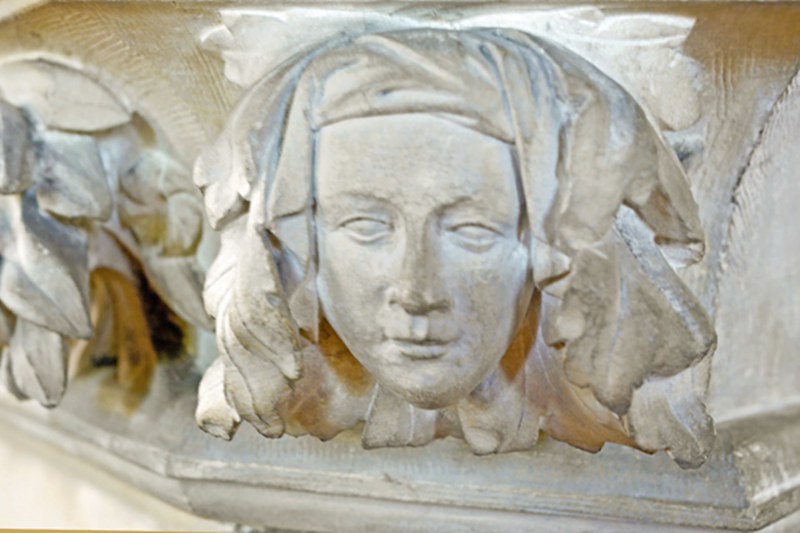 Victorian carving that complements the medieval fabric.
The Brereton Family & the Muzzled Bear
The following is taken from the book by Robert Maitland Brereton
‘The Breretons of Cheshire 1100 – 1904’
‘Family tradition has preserved the following interesting fact as to the origin of the muzzle upon the bear’s head in the Brereton arms: Once upon a time in a battle, of uncertain date, the Brereton of the day, a stalwart knight, was guilty of an excess of ardour, and pushed an advantage too far, in the Prince Rupert style. The king who witnessed the brave fault, and thought it called for a mild rebuke, exclaimed: “I shall put a muzzle upon that bear,” and directed it to be notified to the Herald’s college.’
Look for bear motifs on the choir stalls and the 1907 chancel memorial.
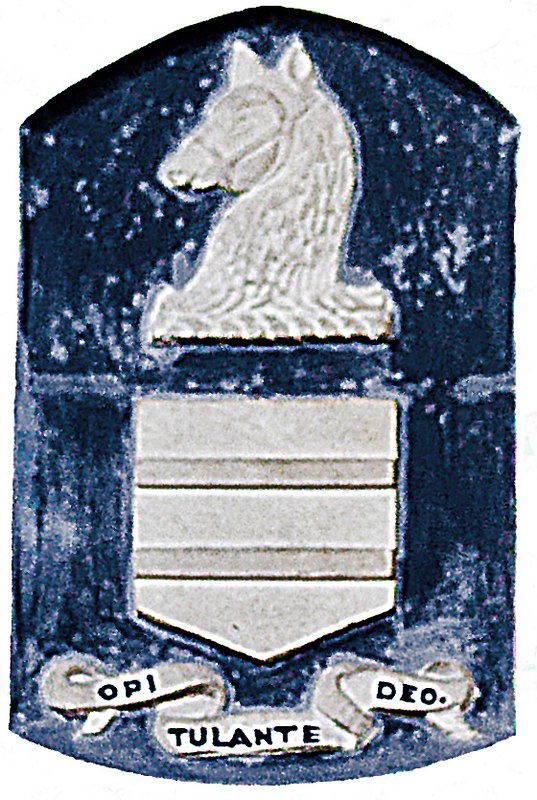 Brereton shield on the 1907 chancel arcade memorial.
Bench-Ends & Pew Carvings
The muzzled bear appears again on choir stall bench-ends — a detail that inspired our modern church logo, echoing the character of the historic woodwork.
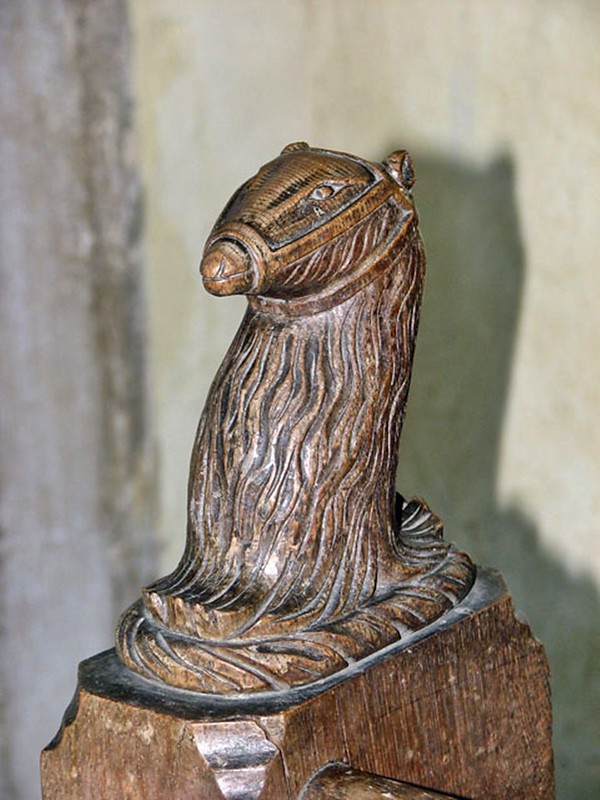 Bench-end with the muzzled bear motif (credit acknowledged where stated).
Victorian Craft: Thomas Jeckyll (1857)
In 1857 the architect Thomas Jeckyll renewed the furnishings: a high-Victorian pulpit and benching that sit well with the medieval fabric. A playful “green man” is often spotted among the carving.
Detail from Jeckyll’s pulpit.
Reredos & Chancel Work (1907)
Early-20th-century work added a richly carved reredos and memorials that frame the sanctuary with dignity, drawing the eye towards the altar.
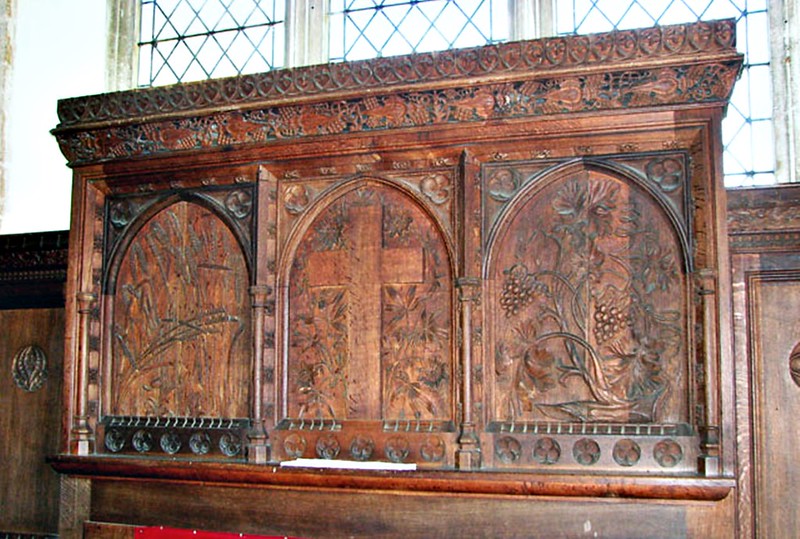 The 1907 reredos with intricate tracery and panels.
Memorials & Remembrance
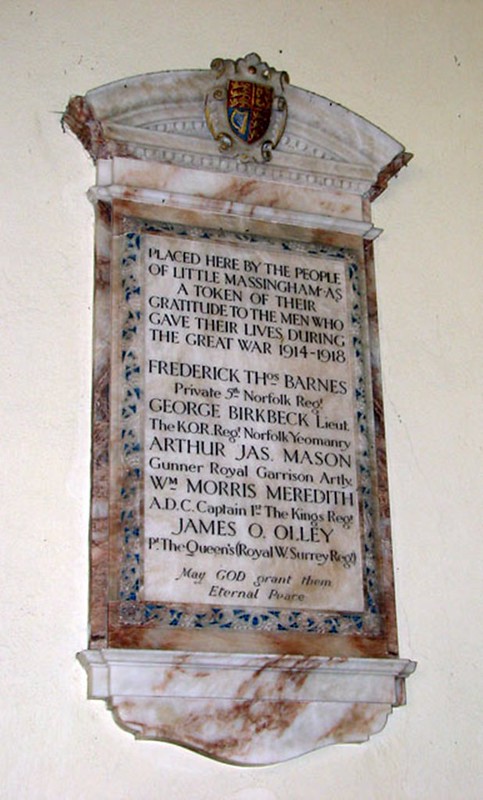
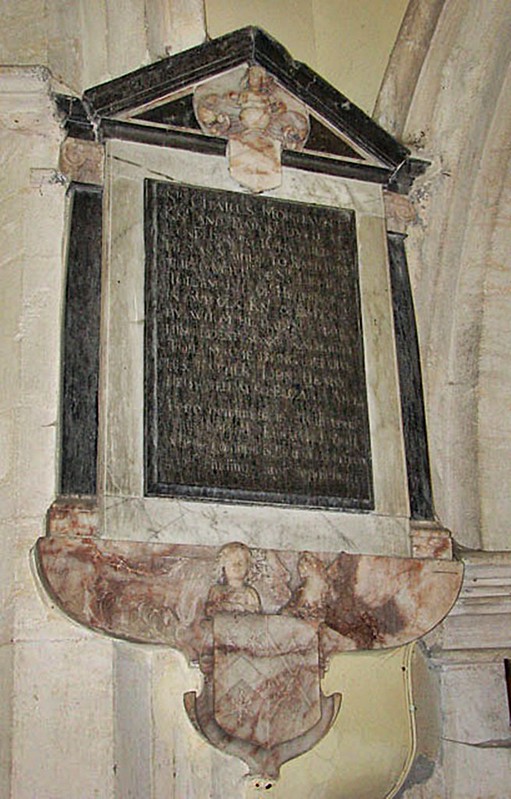
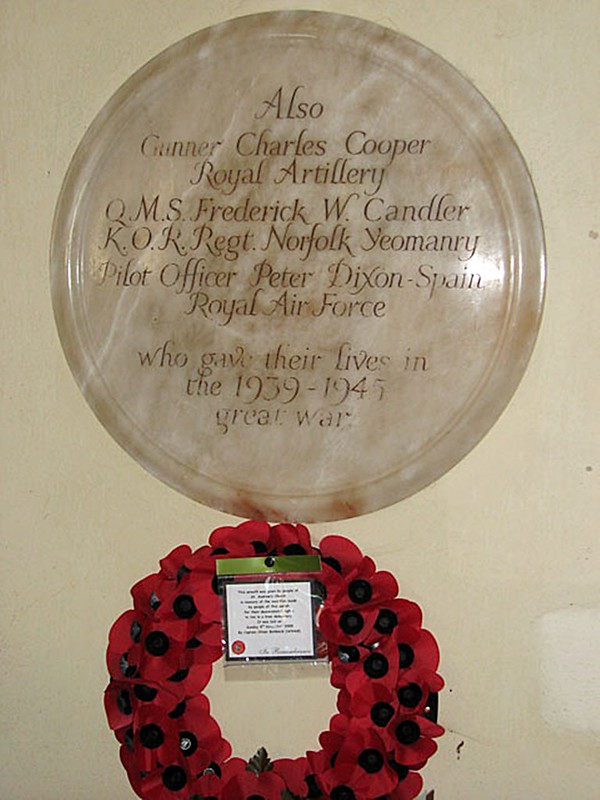
St Andrew’s remembers local lives across centuries — from historic monuments to those who served in the World Wars. The churchyard contains Commonwealth War Graves, and inside you’ll find tablets and books of remembrance.
Read more at In Remembrance — Little Massingham.
Living Heritage
St Andrew’s remains the heart of the village: a place of worship and community, hosting services, concerts and exhibitions. Gifts and visits help conserve the building for future generations.
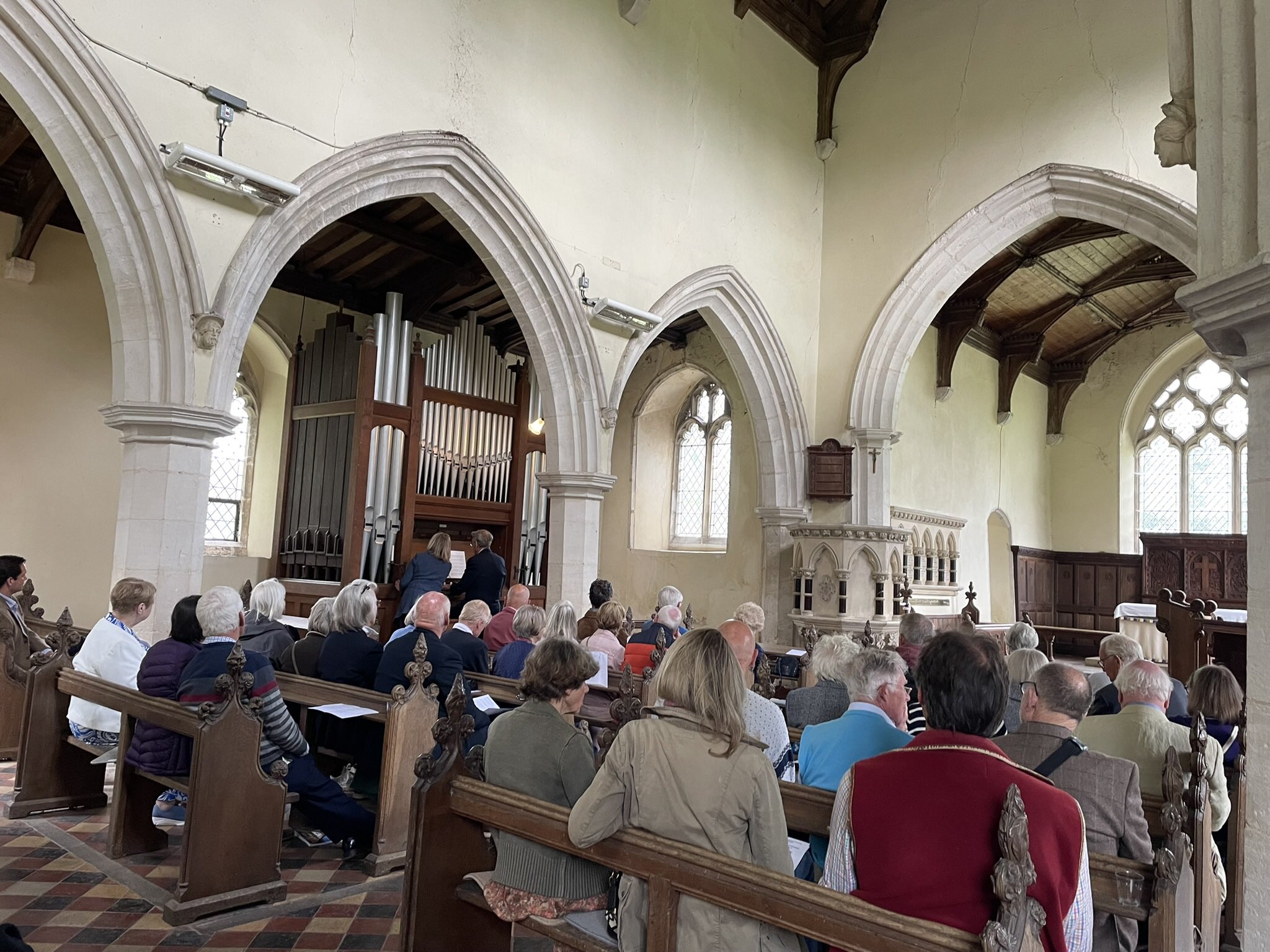 Music, events and community — today’s life of the church.
Plan a visit or help conserve the church
Discover more in person — and support ongoing care of this historic building.